Australian gold output inches higher by four tonnes year-on-year
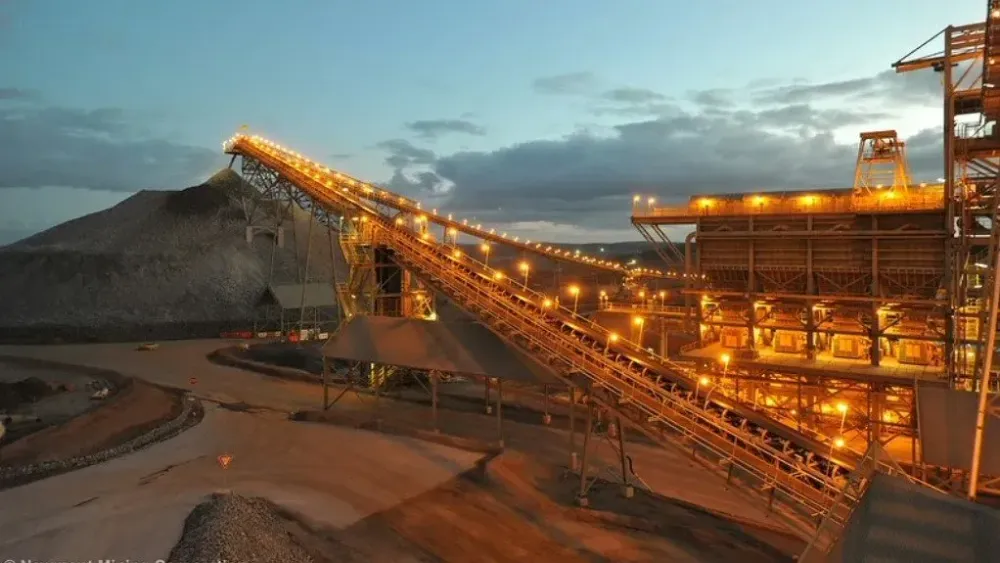
Australian gold production continues to average 300 t/y, or nine-million ounces a year, says consultancy Surbiton Associates.
The firm finds that gold production in the region totalled 303 t, or 9.7-million ounces, in 2025/26, which was four tonnes higher than the prior year.
This production is worth A$60-billion, or $43-billion, at current prices.
Surbiton director Dr Sandra Close says gold prices have been strongly influenced by concerns about US dollar interest rates, which, together with higher international oil prices owing to the US/Iran war, are causing anxiety about inflation in the US.
"The prospect of higher US interest rates boosts the value of the US dollar and results in lower gold prices," she states.
A further concern is the ever-increasing US national debt. Currently it totals just over $40-trillion or around $117 500 for every single person in the US. The interest bill on this debt is now more than $3-billion a day or more than the US defence budget.
“Is it any wonder that many central banks and large financial institutions are reducing their holdings of US dollars and are buying gold instead?” Close questions.
As the value of the US dollar declines, it takes more, less-valuable dollars to buy one ounce of gold. This results in a higher US dollar gold price. Conversely, when the value of the US dollar rises, US dollar gold prices fall.
Meanwhile, among the Australian gold producers with increased gold production is Newmont’s Boddington mine, which delivered a significant increase of 49 000 oz in the June quarter, compared with the March quarter.
This was followed by Tropicana (AngloGold/Regis Resources) which reported a 23 000 oz increase in production and Northern Star’s Thunderbox-Bronzewing operation, which had production increase by 15 500 oz.
However, at Newmont’s Cadia operation in New South Wales, gold production declined by 60 000 oz compared with the March quarter owing to the suspension of operations following a seismic event. If Cadia had produced a similar amount of gold as it did in the previous quarter, Australian gold output would have been almost two tonnes higher. Additionally, Gold Fields’ Granny Smith mine saw production decrease by 8 600 oz.
“Most operations produced more gold in the June quarter than in the previous quarter, with several smaller producers also starting up. Toll treating, or the alternative of selling ore, are both popular with the smaller end of the list of producers," Close explains.
She points out that those operations which produced both gold and copper were recording some excellent results, in part owing to the way copper credits are computed.
In mid-September, three-month copper prices hit a record of $14 858/t (A$20 585/t) on the London Metals Exchange (LME). For some Australian gold producers which have copper credits, the cost of gold production can be strongly negative.
Evolution Mining’s 80%-owned Northparkes operation in New South Wales is an excellent example. At Northparkes, ore treated graded 0.17 g/t gold and 0.57% copper in the June quarter; the all-in sustaining cost of gold production, after allowing for copper credits, was an extraordinary minus A$10 696/oz.
The LME average cash copper price for the June quarter was $13 324/t. For the September quarter so far, the average cash copper price has risen further to $14 119/t.