BMI lists screening of foreign investment, high labour costs, wildfires as Australian mining's main risks
Mining and metals research firm BMI find that Australia's industry risk profile is largely being shaped by climate exposure and labour scarcity, though these effects vary by sector.
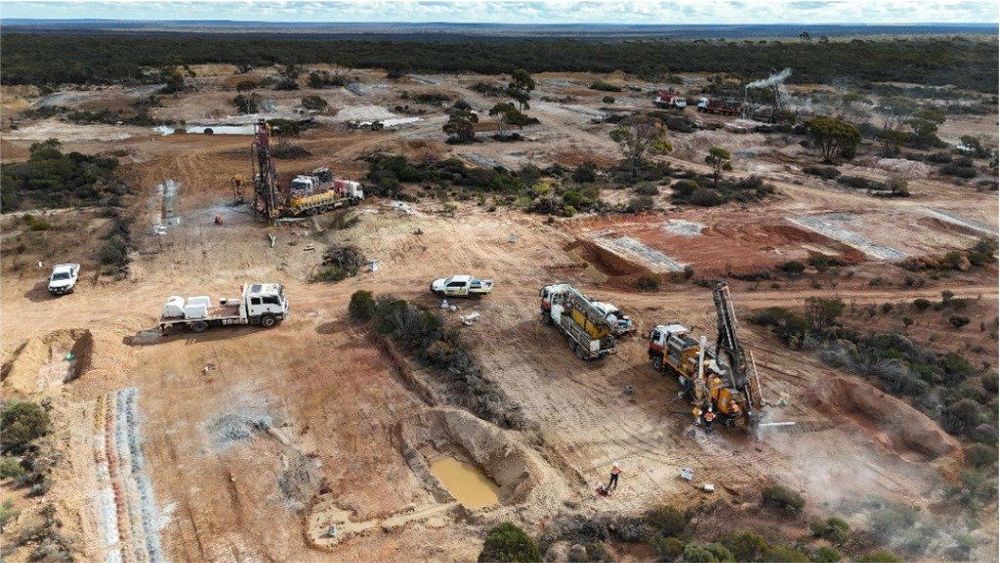
Climate-related risks are most acute in mining and agriculture, particularly in Western Australia with nearly 90% of the state's land being prone to bushfires, exposing this mining sector to elevated physical climate risk.
BMI's proprietary asset-exposure data shows mining’s climate risk score rising from 64.5 in 2026 to 65.4 by 2050, with the impact likely to be felt mainly through higher insurance and private capital expenditure rather than weaker output.
In turn, labour shortages present a more economy-wide challenge, with gaps pronounced in health, education and construction. BMI expects this pressure to intensify as tighter migration settings constrain access to overseas skilled workers - an important source of labour for several sectors.
In mining, labour costs remain high relative to competing mining jurisdictions and wage disputes are a recurring threat - a pressure which BMI expects automation to only partly offset over the coming decade.
Another material financing risk for Australia's mining industry is that of governance.
Government procurement is currently equal to 17.9% of GDP, while 34 active National Anti-Corruption Commission (NACC) investigations as of May raise tender-integrity risk for a sector dependent on public approvals and infrastructure access.
BMI also cites heightened national-security screening of foreign investment in critical minerals as a challenge, as it adds another layer of regulatory friction. The firm says Australia's mining remains the sector most exposed to the policy uncertainty created by rising political fragmentation.
In respect of the broader economy, BMI says Australia's policy responses have so far remained targeted rather than structural, limiting their ability to materially reduce sector risk. In agriculture, federal and State drought-support measures provide short-term relief, but do not address longer-term constraints around water infrastructure investment, leaving the sector exposed to recurring climate stress.
"Major infrastructure spending commitments are supporting transport and low-carbon energy development, but do little to ease the skilled labour shortages that continue to constrain execution," BMI notes.
BMI further finds that Australia's mining industry is forecast to decrease in value from $172-billion in 2026 to $164-billion by 2035 as coal and iron-ore output softens.
New South Wales halted applications for new greenfield coal mines in March, however, continued federal approval of mine life extensions and expansions – including a 24-year extension for Middlemount in February – will support fossil-fuel export earnings despite the government’s net-zero target by 2050.
On the social front, BMI expects the Australian mining sector's shift toward automation to offset labour scarcity, which the firm says will likely reduce the country's role as a regional employer over time, even as critical-minerals expansion sustains investment.
Moreover, BMI expects fossil fuels to continue accounting for more than 86% of Australia's total energy consumption by 2035, even as non-hydro renewables rise to 66% of the power mix. This indicates that the power generation sector's emissions profile will improve only gradually and remain misaligned with the scale and pace of transition required.