Fortescue demonstrates effectiveness of world's first arsenic removal tech for copper
Iron-ore major Fortescue has sold more than 40 t of copper concentrate cleaned using its new world-first arsenic removal technology, creating a solution for a complex problem facing the global copper industry.
The patented Toowong Process uses a low-temperature, low-pressure hydrometallurgical method to separate arsenic from copper concentrate.
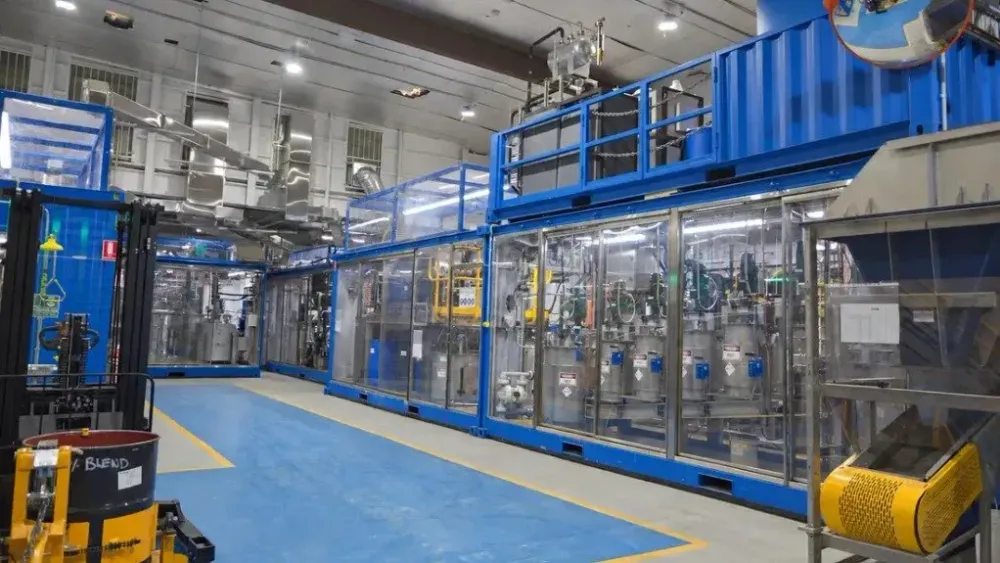
Fortescue acquired the technology in 2022 and has been developing and testing it over the last four years at its Brisbane demonstration plant.
Across seven campaigns and more than 3 000 hours, the Toowong Process reduced arsenic levels in concentrates to below 0.3%, while also retaining more than 99.9% of the copper.
Arsenic has been a major barrier to unlocking new copper resources globally and its removal from copper ores has conventionally relied on roasting, an incredibly energy-intensive process. Roasting generates significant emissions, requires complex infrastructure and produces toxic water-soluble arsenic bearing gas and dust emissions that need to be controlled.
The Toowong Process is proving to be an economic alternative, with comparable capital and operating costs, improved output and reduced energy consumption and emissions.
The first 40 t of cleaned copper concentrate produced from Fortescue’s Brisbane site contained less than 0.25% arsenic, reduced from feedstocks containing up to 7% of the contaminant.
This product has now been sold, demonstrating that the Toowong Process can produce marketable, commercially competitive copper concentrate from high-arsenic feedstocks.
“Technology and innovation are central to Fortescue’s future growth. We look for problems others see as barriers and work out how to solve them.
“In the early days of iron-ore, Fortescue challenged the assumption that lower-grade deposits could not be developed competitively. The Toowong Process brings that same mindset to copper," says Fortescue growth and energy CEO Gus Pichot.
He adds that this technology has the potential to make high-arsenic deposits more economically viable, addressing major processing challenges and eliminating emissions at the same time.
“The world needs more copper to build renewable-energy projects and expand electricity networks and Fortescue’s innovations will be key to unlocking the resources that can meet that demand,” Pichot states, adding that the company will use this technology as it explores more copper deposits globally and make it available for its peers.
Global copper demand is forecast to grow more than 50% by 2050, reaching at least 50-million tonnes a year.
Existing clean ore bodies are being depleted to meet that demand, forcing copper producers to explore and develop more complex deposits that can contain higher levels of impurities, including arsenic.
Until now, arsenic has made some copper concentrates unmarketable, with smelters unwilling to accept product or imposing costly penalties that reduce value. High arsenic levels can also constrain mine plans if material must be blended, treated or excluded.
The Toowong Process has the potential to improve the saleability of copper concentrate - removing arsenic turns otherwise unmarketable concentrate into a product that can be sold. It also allows producers to optimise mine inventories, lower development costs, improve life-of-asset production and reduce environmental impacts.
Pichot explains that compared with roasting, the Toowong process uses less energy, generates lower emissions and captures arsenic in a stable, solid product.
Fortescue continues, meanwhile, to optimise the Toowong Process and advance its commercial engineering, with a focus on further reducing capital and operating costs.
This includes testing concentrate produced from Fortescue’s Cañariaco copper project in Peru.
At Cañariaco, the process has the potential to unlock significant value by making more of the project’s concentrate marketable, helping to support the conversion of more resources into mining inventory and enabling a more flexible, lower-cost mine plan with stronger production over the life of the asset.