Gold surges $40 on ceasefire hopes
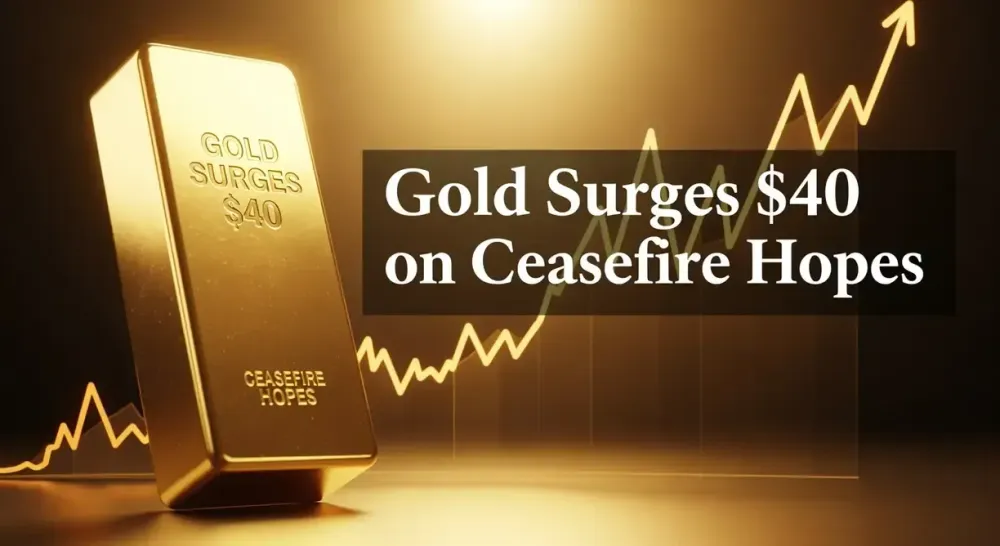
Gold posted a $40 advance on Thursday, June 4, climbing from Wednesday’s close near $4,465 to trade above $4,507 per troy ounce by mid-morning, its best single-session gain in weeks while silver’s $1.15 gain did not alter its downward trend taking it to approximately $73.25. The two-metal rally offered a welcome change of tone after a choppy week that had kept both markets pinned near recent lows.
The catalyst for gold’s move was a combination of geopolitical and currency factors that converged early in the session. An Israel-Lebanon ceasefire agreement raised hopes for broader de-escalation of the U.S.-Iran conflict that has roiled energy markets since March, softening the dollar and easing some of the inflation anxiety that has weighed on the metal. The U.S. House of Representatives also passed a resolution this week seeking to curtail further military action against Iran, a development that traders interpreted as incremental progress toward an eventual diplomatic resolution even if the market response remained cautious.
The move carried gold back above the technically important $4,500 level, which has acted as resistance throughout the past month. Technical analysts noted that gold had formed a double bottom near $4,425 earlier this week before rebounding, and that a sustained close above $4,530 would be needed to confirm the next leg higher. For now, Thursday’s gain looks like a meaningful recovery from what several desks had been calling a confusing but characteristic bottoming phase ahead of a potential summer rally.
Silver’s $1.15 advance, while modest in percentage terms, reinforces the metal’s continued outperformance on a year-over-year basis. Silver is up more than 100% compared to this time last year, handily outpacing gold’s already impressive 34% year-over-year gain. July silver futures opened at $73.08 before recovering through the morning, reflecting both the safe-haven bid that lifted gold and the persistent industrial demand story particularly from solar manufacturing and electronics that has tightened the physical market.
The macro backdrop remains the key variable heading into the back half of the week. Friday’s nonfarm payrolls report is the most closely watched near-term catalyst for both metals. Recent labor market data have pointed to continued employment acceleration, consistent with ADP and JOLTS reports that reinforced a hawkish Federal Reserve outlook. Cleveland Fed President Beth Hammack signaled this week that rate hikes remain on the table if inflation pressures persist a posture that kept Thursday’s gold rally from extending further. Markets have fully priced out rate cuts for the remainder of 2026, and some trading desks are openly modeling a hike before year-end.
Looking to next week, the range of outcomes for gold remains unusually wide. Analyst forecasts for June center on $4,300 to $4,725, though a decisive geopolitical catalyst in either direction could push prices well outside those bounds. A genuine reopening of the Strait of Hormuz, the near-shutdown of which has kept energy prices elevated and inflation concerns front of mind would ease rate hike fears and could send gold meaningfully higher. One analyst put $4,800 “in play” under that scenario. Conversely, a hot payroll report Friday that accelerates Fed hawkishness could quickly give back Thursday’s gains and retest the $4,400 support zone.
Providing a steady floor beneath the volatility is continued central bank demand. Major central banks purchased an estimated 244 metric tons of gold in the first quarter of 2026, maintaining the institutional accumulation pace that market veterans regard as the most durable structural support for the metal. That buying is not sensitive to day-to-day price swings and has repeatedly prevented deeper corrections.
For now, Thursday’s $40 advance is the kind of session gold bulls needed: technically constructive, fundamentally explained, and achieved without the artificial urgency of a single headline. Both metals remain within their long-term uptrends on monthly charts. The next 48 hours — culminating in Friday’s jobs report will determine whether the momentum holds.