Heavy rare earths central to Western supply squeeze as market grows
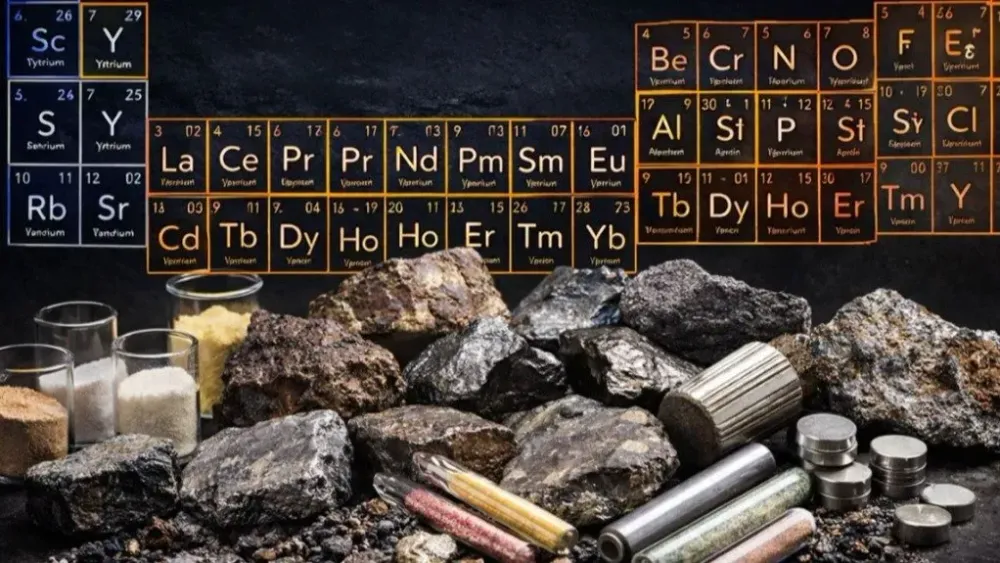
Global consultancy The Business Research Company estimates the global rare earths market will grow from $6.86-billion in 2026 to $10.44-billion by 2030, which equates to a compound annual growth rate (CAGR) of 11.1%, with North America being the fastest-growing region.
The pressure point, however, is not tonnage but the heavy rare earths and yttrium where Western supply remains thin and where a single policy deadline looms, Business Research states, especially with China having placed seven medium and heavy rare earths (samarium, gadolinium, terbium, dysprosium, scandium, lutetium and yttrium) under export licensing controls in April 2025.
Another forecast from Persistence Market Research values the rare earths market at $7.8-million in 2026 and expects it to grow to $15.4-billion by 2033, which marks a 10.2% CAGR. Persistence also finds North America to be the fastest-growing market in this respect, with the region's rare earths market expected to grow at 13.6% a year, owing to US commitments to building fully integrated domestic rare earths supply chains.
To illustrate the two-tier market forming in the world, American News Group cites S&P Global as saying that rare earth exchanges in September recorded a dysprosium oxide transaction in North America valued at $3 250/kg and terbium oxide at $7 500/kg, compared to Chinese reference prices of $212/kg and $218/kg, respectively, which shows the economic signal required to bring new capacity online.
Among the heavy rare earth projects being advanced in the US is the Peak project owned by Tactical Resources Corporation, in Texas, which remains an early-stage project.
In turn, USA Rare Earth is advancing the Round Top heavy rare earths project, also in Texas, with the company having recently broken ground on a rare earths metal and magnet manufacturing facility in South Carolina.
MP Materials, which operates the Mountain Pass rare earths mine in California and a magnet manufacturing facility in Texas, reported neodymium and praseodymium production of 840 t in the second quarter, which increased by 41% year-on-year.
Moreover, Energy Fuels has started expanding its White Mesa Mill, in Utah, to enable large-scale production of heavy rare earth oxides, while NioCorp Developments recently released an updated feasibility study on the Elk Creek project, which can produce scandium trioxide, dysprosium oxide and terbium oxide.