Gold’s safe haven status is intact, high gold and silver prices are boosting exploration budgets – Heraeus

Gold’s case as a safe haven remains as strong as ever despite the Iran war pullback, and Fed policy will likely remain supportive of the yellow metal, while exploration budgets for both gold and silver continue to rise, according to precious metals analysts at Heraeus.
In their latest update, the analysts provided an analysis of gold’s performance as a safe haven in light of the Iran war.
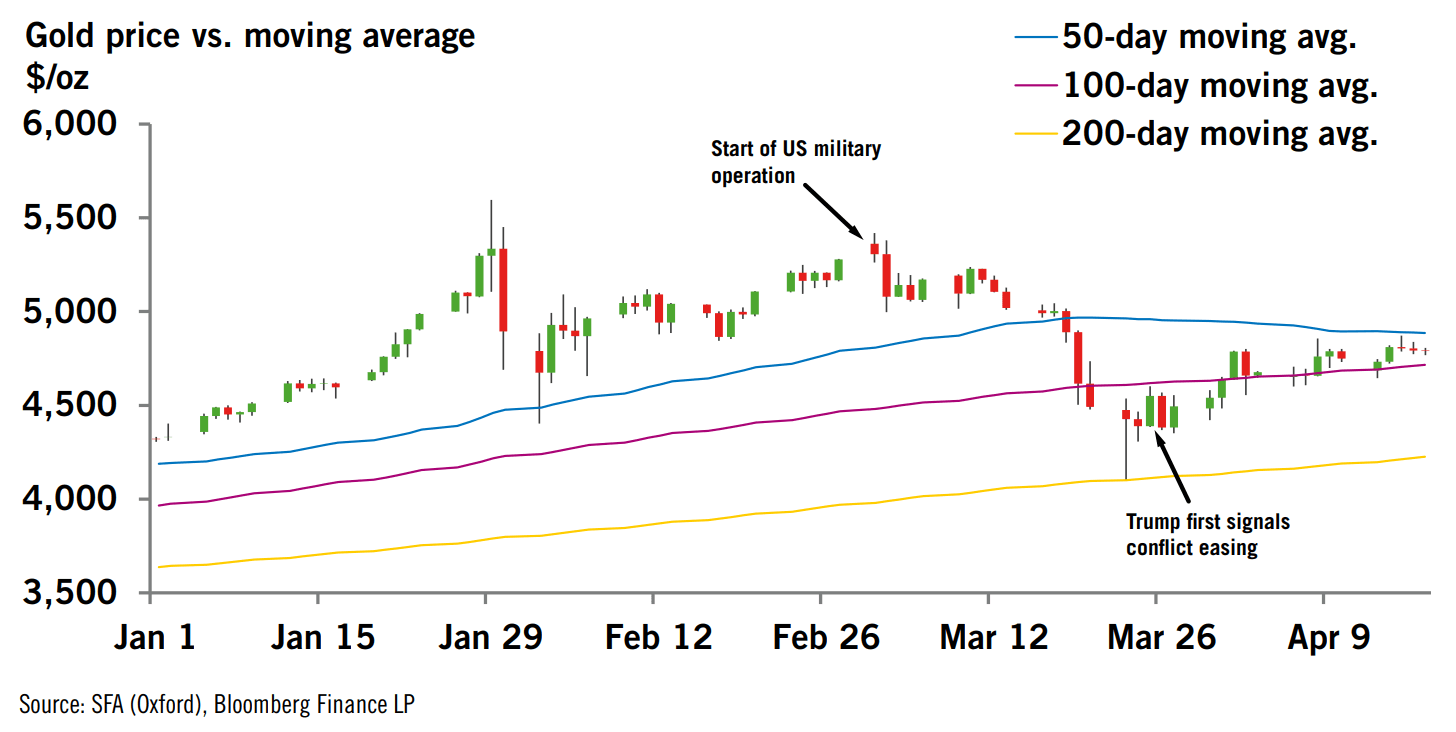
“During 2026, the gold price has been exposed to both fundamental and speculative demand that is antecedent to these price moves,” they said. “Most notably, over the trading days immediately following the beginning of the US military operation in Iran, 2 and 3 March, gold prices, along with stocks, fell. Furthermore, as the geopolitical situation worsened, gold continued to decline, failing to reach its highs of just over $5,400/oz posted on the first trading day of the month.”
“Gold fell dramatically after breaking below its 50- day moving average on 18 March,” they noted. “It remained weak until hitting its 200-day moving average on 23 March, coinciding with the first signs of the conflict easing emerging on 26 March when Trump claimed attacks on Iran’s energy infrastructure were delayed following constructive peace talks. Following this, another upward trend seems to have started, which has subsequently been bolstered by the temporary ceasefire announcement on 7 April.”
“The fundamental case for gold investment comes from it being counterparty free, if held physically, and maintaining its purchasing power against centuries of monetary inflation and currency debasement,” the analysts wrote. “The demand that follows this is consistent with a long-term focus coming from central banks, institutions and some retail investors. However, there is a speculative aspect of gold investment which is essentially a trade on price momentum and technicals with the goal of capital appreciation. This demand comes from institutions and retail investors seeking to buy and sell with a short-term focus.”
They noted that throughout 2025 and early 2026, gold’s rapid gains “attracted more speculative activity that compounded the attraction of gold, which was based on the rise in geopolitical and economic uncertainty,” which had the effect of reducing “the investment time horizon of the average market participant as more speculators have entered the market.”
“A number of instances where the gold price moves in the opposite direction to what would be likely from a flight to safety can, therefore, be expected.”
Heraeus said that these moves do not change the fundamental case for gold. “Some repositioning and deleveraging during times of cross-asset volatility should be expected,” they said. “The gold price responding to technical indicators is also an expected symptom of shorter-term speculative market participants.”
“This volatility is likely to last for some time, but, in the long run, gold will retain its fundamental attraction as a way to retain purchasing power.”
Turning to the more recent and immediate drivers of gold, the analysts said the Federal Reserve is unlikely to raise rates even after the rise in CPI inflation.
“In the 12 months to March, the US Consumer Price Index increased to 3.3%, a 0.9 percentage point rise from February’s figure,” they wrote. “Energy was the main contributor to this rise with a 10.9% increase in March, which was heavily influenced by a 21.2% hike in the price of gasoline. The figure for core CPI, which discounts food and energy owing to their volatility, climbed to 2.6% in March, an increase of 0.1 percentage points from February.”
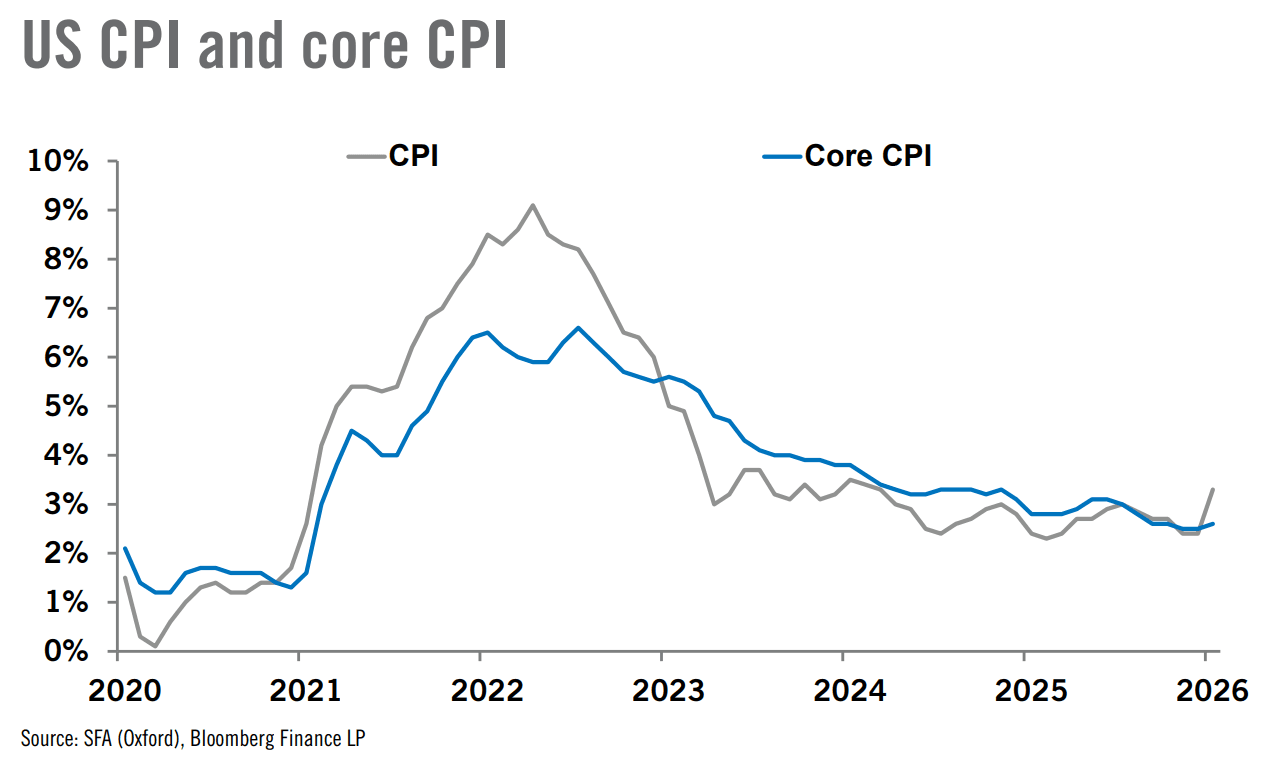
“While this large rise in the CPI could be a concern for the Federal Reserve, increasing interest rates are unlikely to make an impact as the rise is being caused by external factors, namely the war in the Middle East,” the analysts said. “The Fed will likely point to the relatively stable core number and maintain a dovish tilt for fear of damaging the economy.”
Heraeus also noted that capital expenditure on gold exploration is rising. “Gold exploration budgets have risen by 11% to $6.15 billion on the back of record gold prices,” they said. “Major companies dominate this expenditure, accounting for 57% of total budgets (source: S&P Global). Their spending is primarily focused on extending the life of existing mines by exploring nearby areas for additional ore. They have also been investing in already operational mines to expand production and improve recovery rates.”
Spending on greenfield exploration has declined, however. “It takes longer, and is much riskier, to develop earlier-stage sites to production,” the analysts noted. “This, combined with increased financing costs driven by a higher interest rate environment, has reduced the incentive for greenfield exploration relative to brownfield development.”
“The lack of grassroots development could lead to future supply constraints as mines age and ore grades fall.”
Heraeus is also looking ahead at the expected North American IPO from Barrick in 2026. “Barrick Mining Corporation has announced an IPO of a company to hold its premier North American gold assets,” they wrote. “The new company will hold Barrick’s joint venture interests in Nevada Gold Mines and Pueblo Viejo, and its wholly owned Fourmile discovery in Nevada. Barrick will retain a controlling majority interest in the new company over the long run. This reflects a new intent from Barrick to invest more heavily in Tier-1 jurisdictions and reduce its exposure to riskier parts of the world.”
Gold is trading near session highs on Monday morning as it continues to challenge resistance near $4,830 per ounce.
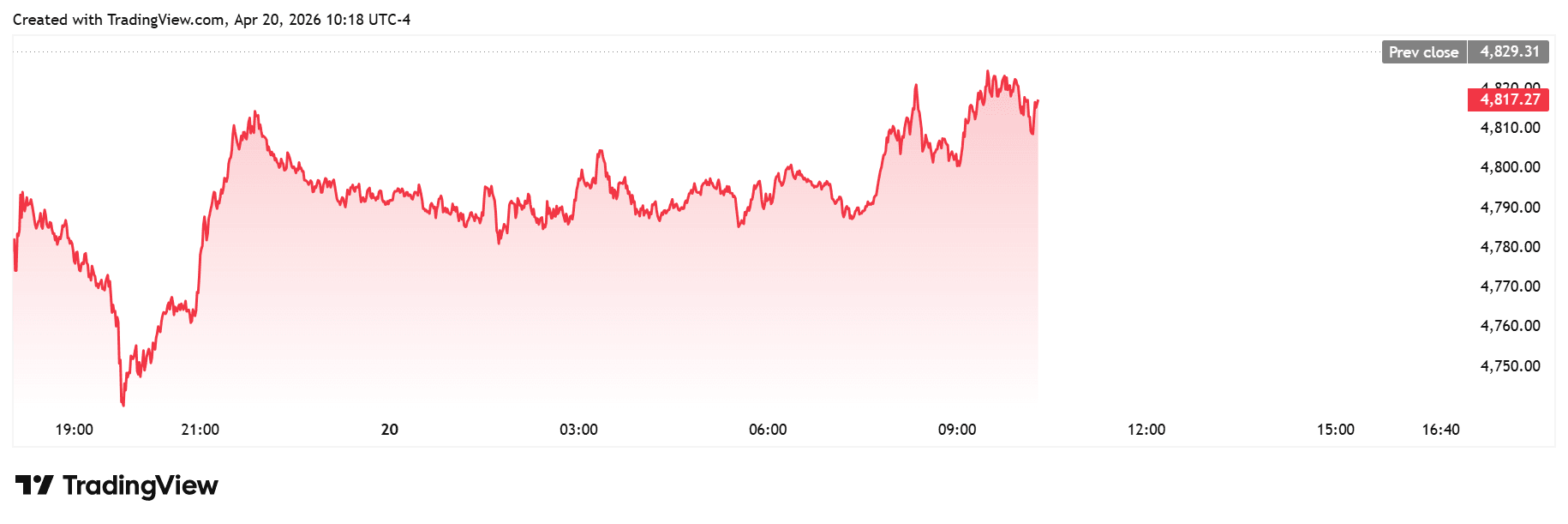
Spot gold last traded at $4,817.45 per ounce for a loss of 0.25% on the session.
Turning to silver, Heraeus analysts said exploration budgets for silver are following the trend seen in gold.
“Silver climbed above nickel to become the fourth most explored target in 2025, below only gold, copper and lithium,” they said. “Similarly to gold, silver exploration budgets are focused on extensions and improvements to existing mine sites and come mostly from major silver miners. The large run-up in silver prices in 2025 led to more drilling and significant results. Silver projects were up 26% in 2025, while those meeting the estimated grade to be economically viable rose by 37%.”
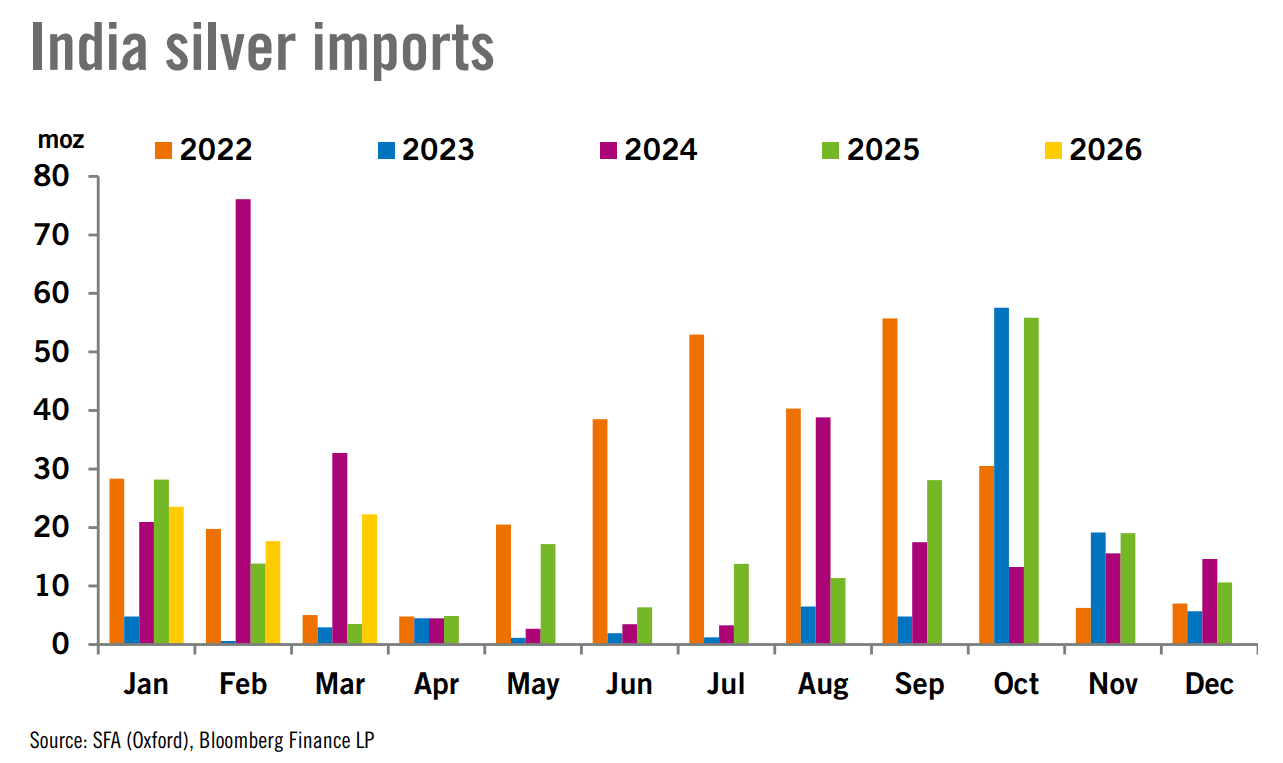
The analysts also pointed out that Indian silver demand continues to grow both in physical and monetary terms.
“Indian demand for silver rose significantly in the financial year through to end of March 2026,” they noted. “India imported 7,334.96 tonnes (235.8 moz) of silver in the last financial year, an increase of 42% on the year before. The total cost of these imports surged by 149.5% to $12.05 billion. This reflects strong demand from India for precious metals, both for investment purposes as an inflation hedge and as jewellery.”
Mined silver output has also increased along with prices. “Global mined silver supply grew to 846.6 moz in 2025, an increase of 3% from 2024,” the analysts wrote. “This expansion was led by Central and South America where higher grades and early stage mines combined to lift supply from the region by 5% from 2024. Elsewhere, output from North America, Asia and Oceania contracted in 2025.”
High prices also drove an increase in secondary supply last year, according to the latest data from The Silver Institute. “Recycled supply grew to 197.6 moz in 2025, up 2% from 2024,” they said. “Jewellery and silverware were the largest contributors to this, with year-on-year increases of 6% and 7%, respectively.”
Silver prices have twice failed to break above $80.680 per ounce on Monday, but they continue to fluctuate on both sides of the $80 per ounce level.
Spot silver last traded at $79.946per ounce for a loss of 1.06% on the daily chart.