Gold maintains strong fundamentals despite oil shock
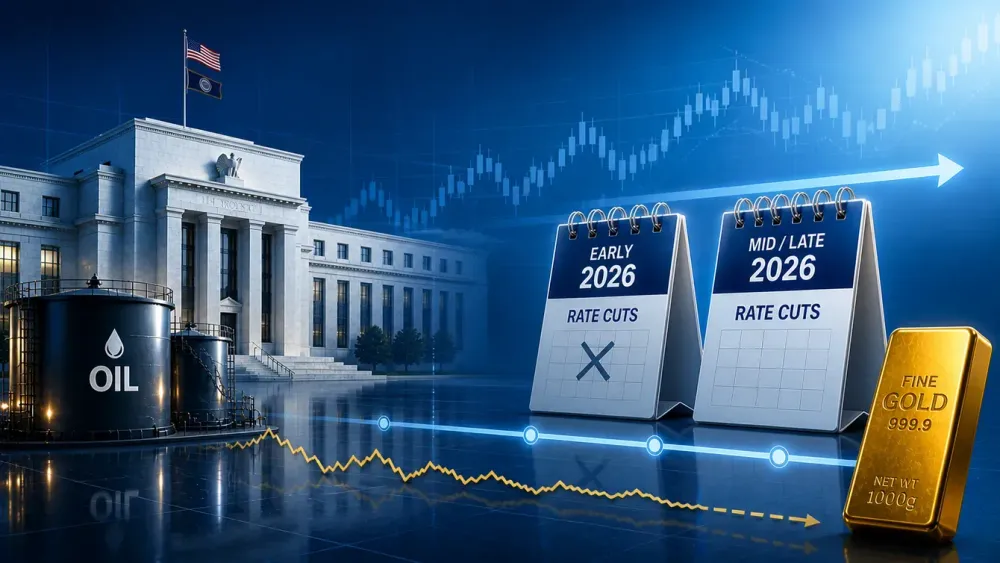
Gold continues to face a challenging headwind as surging oil prices reignite inflation pressures and force central banks to rethink the timing of monetary easing—or even consider rate hikes.
What had been shaping up to be a supportive environment for gold in 2026—cooling inflation and imminent rate cuts—has quickly shifted. Central banks are now adopting a more cautious, wait-and-see stance as energy-driven inflation complicates the outlook. Rate hikes may be off the table, but expectations for cuts have been pushed further out, raising the opportunity cost of holding gold as a non-yielding asset.
This shift has been enough to unsettle the precious metals market. Gold is no longer trading purely as a safe haven; it is increasingly reacting to interest rate expectations, and those expectations are moving in the wrong direction.
The catalyst behind this shift is clear. According to the World Bank’s April outlook, the global economy is facing the largest oil supply shock on record following the escalation of conflict in the Middle East. Brent crude surged from $72 to as high as $118 per barrel in March, with energy prices expected to rise 24% in 2026. This kind of supply-driven inflation is particularly problematic for gold because it forces central banks to stay restrictive for longer, even as economic growth slows.
And yet, despite these growing headwinds, gold’s underlying fundamentals remain remarkably strong.
The World Gold Council reported that total gold demand rose 2% year-over-year in the first quarter to 1,231 tonnes, while the value surged 74% to a record $193 billion. Investment demand continues to dominate, with bar and coin buying jumping 42% to 474 tonnes—the second-highest quarterly level on record.
This surge in physical demand, particularly from Asia, signals that investors are still turning to gold as a hedge against uncertainty. It also explains why bullish sentiment has not collapsed, even as prices consolidate.
In fact, many analysts argue that the long-term drivers of gold’s rally remain firmly intact. Bank of America has reaffirmed its 12-month target of $6,000 an ounce, pointing to structural factors such as rising global debt and persistent geopolitical risks.
The World Bank also expects gold prices to remain historically elevated, forecasting an average of around $4,700 an ounce in 2026. However, that outlook reflects a more mature phase of the bull market, where prices remain high but face increasing resistance from macroeconomic forces, particularly interest rates.
That tension defines the current gold market. Oil-driven inflation is reinforcing gold’s role as a hedge, but it is also delaying rate cuts and capping upside momentum.
Gold may look vulnerable in the near term, but the bigger picture hasn’t changed. With rising debt levels and deepening geopolitical fractures, gold remains firmly in a long-term bull market—even if the path higher becomes more volatile.