BHP upgrades copper guidance on back of record half-year performance
Mining major BHP has lifted its 2026 copper production guidance after delivering record operating performances across its copper and iron-ore assets in the half-year ended December 31, capitalising on a sharply higher copper price environment.
Copper prices rose 32% year-on-year during the period, underpinning BHP’s decision to increase group copper production guidance to between 1.9-million and 2-million tonnes for the 2026 financial year, from a previous range of 1.8-million to 2-million tonnes.
“BHP delivered another half of very strong performance with operational records at our copper and iron-ore assets,” CEO Mike Henry said on Tuesday, noting that the outcome was achieved safely and against a supportive commodity price backdrop.
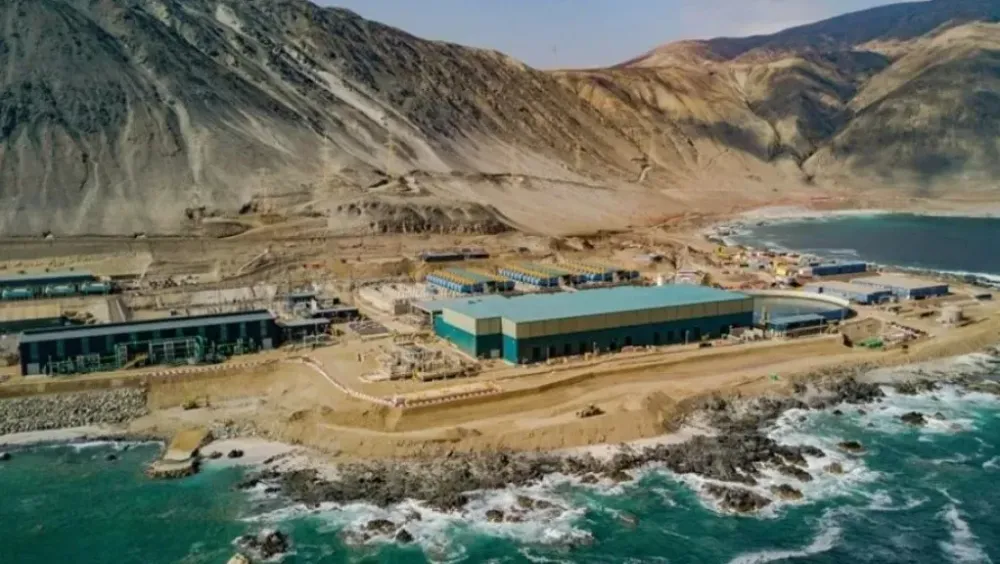
The company’s flagship Escondida operation in Chile was a standout, achieving record concentrator throughput during the half year. The performance prompted BHP to lift the 2026 financial year production guidance for Escondida to between 1.2-million and 1.275-million tonnes, reflecting stronger delivery and improved recoveries, despite lower planned feed grades.
Antamina also lifted its copper production guidance, while Spence and Copper South Australia tracked to plan. Copper South Australia delivered record material mined and achieved record refined gold output as a by-product.
Across the iron-ore portfolio, Western Australia Iron Ore (WAIO) recorded its strongest first-half production and shipments on record, positioning the business ahead of the seasonally challenging third quarter. Volumes at Samarco, in Brazil, increased sharply following strong performance at its second concentrator after its restart late in the previous financial year.
BHP also announced a transaction with Global Infrastructure Partners involving WAIO’s inland power network, which is expected to deliver proceeds of about $2-billion, while allowing the group to retain ownership and operational control.
Steelmaking coal production increased, supported by the highest stripping volumes at BMA in five years, while energy coal output rose by 10%, driven by strong performance at NSW Energy Coal.
While copper and iron-ore dominate BHP’s production profile, the group confirmed that the Jansen potash project in Canada remains on track for first production in mid-2027. The company separately disclosed a higher capital cost estimate for Jansen Stage 1, reflecting inflationary pressures and scope changes, though it continues to position the project as a long-life, low-cost and scalable asset.
Looking ahead, BHP highlighted resilient commodity demand from China, supported by targeted policy measures and exports, alongside India’s emergence as a key demand growth engine for steel and copper. Global growth of about 3% in 2026 is expected to provide a supportive backdrop.
“We are investing for the decade ahead, with a significant copper growth pipeline and a pathway to around two-million tonnes of attributable copper production in the 2030s,” Henry said, adding that BHP entered the second half of the 2026 financial year with strong operating momentum.