Cobra confirms low-cost recovery of more resources possible in South Australia
London-listed, South Australia-focused Cobra Resources has confirmed more favourable rare earth assay results at its Boland prospect, including initial drilling results from the Head prospect.
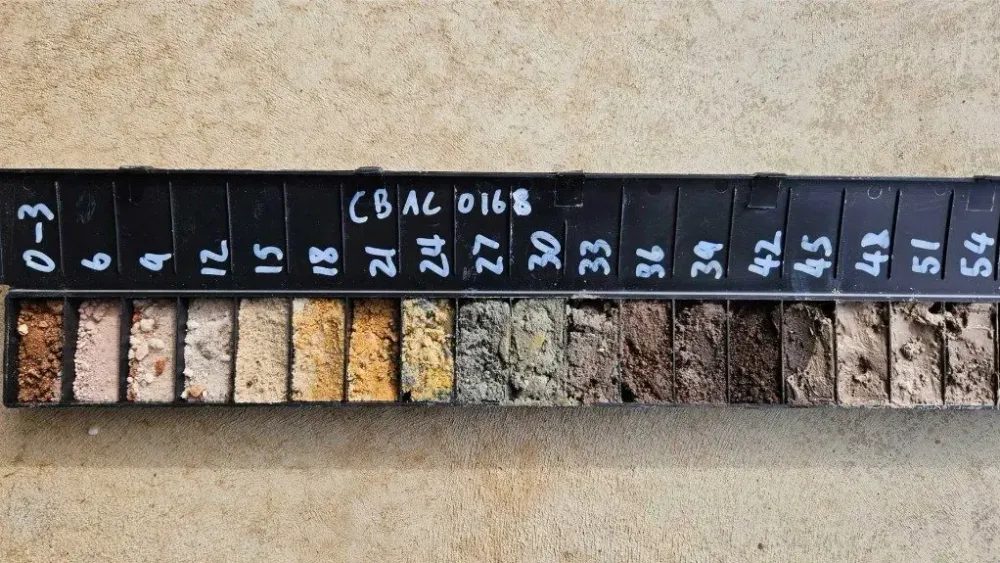
The company undertook 3 200 m of drilling on both prospects comprising 74 holes, which aimed to support a mineral resource estimate for the projects' unique controlled aquifer-hosted ionic rare earth mineralisation which is amenable to low-cost in-situ recovery.
About 80% of planned drilling on the prospects has been completed.
In 2023, Cobra identified the Boland ionic rare earth discovery at its Wudinna project in the Gawler Craton – Australia’s only rare earth project suitable for in situ recovery mining.
Notably, with the latest drilling round, Cobra uncovered a high-grade continuous five-kilometre-long flank at the Head prospect where mineralisation occurs within three lithologies amenable to in-situ recovery. Intersections from this prospect include 5.9 m of total rare earth oxide (TREO) grading 1 232 parts per million (ppm) from 27.8 m; 6.6 m of TREO grading 636 ppm from 26.6 m; 3.8 m of TREO grading 1 322 ppm from 26.1 m; and 1 m of TREO grading 3 607 ppm from 18.6 m.
Cobra confirms that results from another 12 drillholes from the Head prospect remain outstanding.
Notable Boland intersections include 3.2 m of TREO grading 688 ppm from 40.5 m; 1.05 m of TREO grading 1 004 ppm from 32.6 m; and 5.62 m grading 459 ppm from 21.7 m.
Cobra MD Rupert Verco says results from the Head prospect indicate the presence of a significant system that remains open to the north and south. "The prospect contains all the right features to enable cost-efficient in-situ recovery. It highlights that the target geology within the Pidinga formation is likely to be regionally extensive across the 3 200 km2 of paleochannel systems contained within Cobra's landholding in South Australia."
He deems this opportunity truly unique owing to it being the first rare earths project of its kind in which a resource will incorporate modelling of key economic factors for permeability and acid generation. When coupled with the low capital and operating costs associated with in-situ recovery, it changes the industry's expectations of what is economically possible and positions Cobra competitively at the bottom of the cost curve.