EU’s top copper miner KGHM eyes takeovers as global energy shift spurs demand for red metal
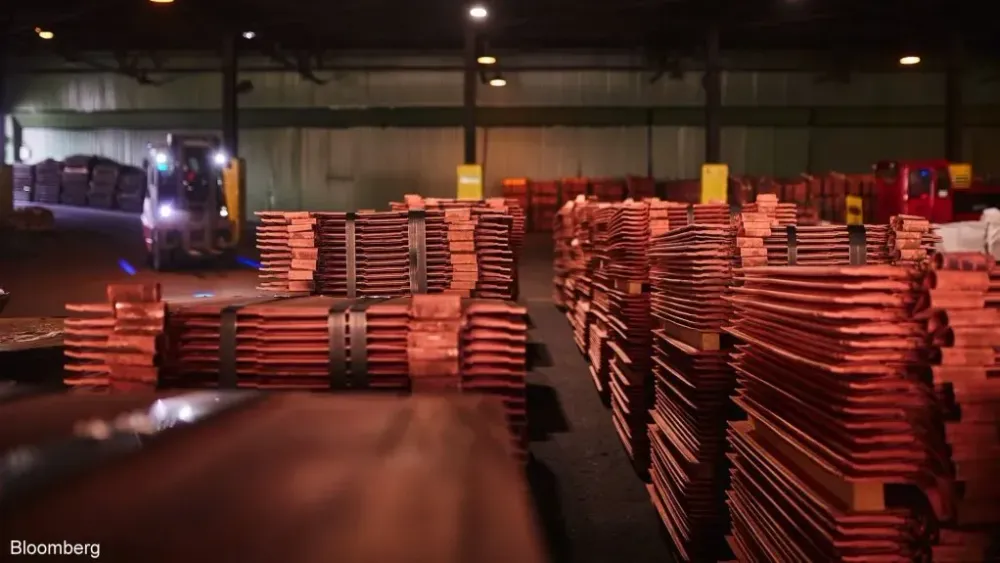
KGHM Polska Miedz SA, the EU’s largest copper producer, plans to expand its footprint abroad as the global shift to cleaner technologies fuels appetite for the red metal.
Poland-based KGHM wants to strengthen its position in Europe and Africa while monitoring takeover targets in the Americas to grow its business, CEO Remigiusz Paszkiewicz said in an interview. Potential acquisitions in Europe and Africa would help it add more of its own input to its Polish smelters, while expanding further afield could bolster the company’s financial clout.
“Everyone is aware that because of the energy transition, investments in wind turbines, electric vehicles, the demand for copper will rise,” said Paszkiewicz. “This process is especially visible in China, where the need for the metal stays at a very high level.”
KGHM’s stock has surged 180% since the start of last year as copper traded near record highs, riding the artificial intelligence and energy boom. The firm, with a market value of nearly $18-billion, has also benefited from being a rare producer of both silver and copper, giving it an edge amid a market rally for both metals in late 2025.
The Polish miner, which has recently signed a memorandum in Morocco on potential investments in the raw materials sector, aims to add about 100 000 t of its own yearly production from the expansion effort closer to home, the CEO said.
These transactions would supplement KGHM’s existing annual mining output of about 390 000 t in Poland, trim logistics costs, and shield it from the rising expense of processing purchased materials in smelters.
“The plans for Morocco and several other locations are directly linked to the necessity of securing long-term, stable supplies for our smelters,” Paszkiewicz said in Warsaw. “It stems from our approach not to excessively exploit our national deposits.”
Poland hosts the EU’s biggest reserves of the metal, which is critical for electrical wiring. KGHM has been producing copper and silver locally since the 1960s but now must dig deeper to maintain desired output levels.
In 2011, it took a bold move to expand to the US, Canada and Chile with the $2.84-billion purchase of Quadra FNX Mining in what still remains the biggest Polish acquisition abroad.
While KGHM’s international assets only recently turned profitable, they generated nearly half of the company’s earnings before interest, taxes, depreciation and amortization, despite accounting for just 20% of volumes last year.
For KGHM, it may be time to grow further in the Americas, according to Paszkiewicz.
The company is evaluating assets in Chile, Argentina, the US and Canada, and is currently narrowing down the list to the most prospective targets. It wants to make a final decision in the next several months.
“There’s no point in waiting because everyone is looking for new opportunities, and KGHM, as a listed and state-controlled company, has a lower tolerance for risk,” Paszkiewicz said. “Competition is certainly big, but we have a balanced approach — we don’t want to engage in projects that would require very big costs.”
This push comes as its Polish operations face high local extraction tax as well as the necessity to mine from deep underground. The firm’s first-quarter C1 cost, a key industry metric showing cash costs incurred from mining to processing to delivering the copper to the market, at its open-pit Sierra Gorda mine in Chile was 47% lower than in Poland.
However, the company may soon get a domestic boost. Canada’s Lumina Metals Corporation has found rich copper deposits near KGHM’s sites and plans to build its own mines there. The Polish producer views Lumina as an opportunity rather than a competitor.
“There’s no better place for processing their raw materials than at our Glogow smelter,” Paszkiewicz said. “Additionally, if Lumina’s investment leads to lowering the copper tax in any way, everyone will benefit.”