Fortescue sees power sales from Pilbara green grid when demand emerges, declares lower dividend
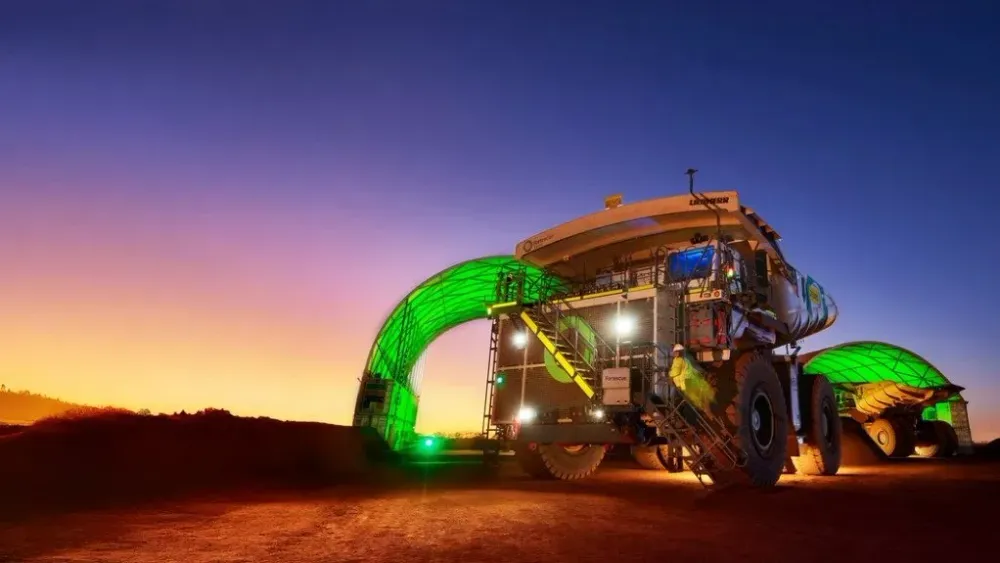
Fortescue's green grid investment in Australia's northwest is set to provide surplus energy that it can sell to data centres as commercial demand develops, although it has yet to ink any supply agreements, it said as it posted in line results on Thursday.
Fortescue is investing heavily in green energy, battery storage and research as it builds a large scale green energy grid in Western Australia's Pilbara region targeting 1.2GW to 1.5GW of total solar capacity by 2028.
It had flagged an investment of $680-million to develop new green energy infrastructure in Pilbara in April.
Fortescue Metals and Operations CEO, Dino Otranto, said the miner was looking to supply energy to third parties including data centres, but had not yet signed any offtake agreements.
"Fortescue continues to invest in technology that will drive down the cost of green energy and help to deliver our own green metal projects," Otranto said on an earnings call.
"We will develop it, test it, prove it, deploy it, and when the technology has a wider commercial market, we will also take it beyond Fortescue and sell it."
The company said this week it had produced green iron at its Christmas Creek facility, nearly a year behind schedule.
The grid supports Fortescue's decarbonisation targets, the most aggressive among Australia's major miners, and will also allow it to shave $2 per ton to $4 per ton of iron-ore costs, given Middle East instability that has raised prices for diesel.
CHINA STATE BUYER
Fortescue flagged that talks with China's State buyer China Mineral Resources Group (CMRG) could affect the price it gets for its iron-ore as the months-long negotiations drag on.
Broker Jefferies, which has an underperform rating on the stock, said that risk was underscored in its fourth-quarter price realisation for iron-ore, falling to 84% from 88% for the full year.
"We continue to engage with China Mineral Resources Group through respectful, patient and good faith negotiations," Head of Energy Agustin Pichot said on the call.
Pichot added Fortescue was concentrating on making an agreement with CMRG, rather than considering using a single selling desk with its Australian peers for iron-ore to China.
Fortescue declared a final dividend of 46 Australian cents per share, down from 60 cents a year earlier, and its lowest in eight years.
It posted a 2.8% rise in underlying net profit attributable to $3.47-billion for the year ended June 30, broadly in line with the Visible Alpha estimate of $3.52-billion.
Record annual shipments of 201.3-million metric tons and higher iron-ore prices helped Fortescue offset higher hematite C1 unit costs, largely driven by elevated diesel prices, and meet market estimates for annual earnings.
Fortescue said it was served with a class action in July alleging workplace misconduct, including sexual harassment and sex discrimination, with potential damages not yet specified.
The miner paid A$150.4-million ($106.95-million) on July 1 after the Federal Court made final orders in the legal proceedings for compensation to the Yindjibarndi people for cultural loss linked to mining on their land. Yindjibarndi Ngurra Aboriginal Corporation plans to appeal.