
Silver sprints ahead, then hits a wall
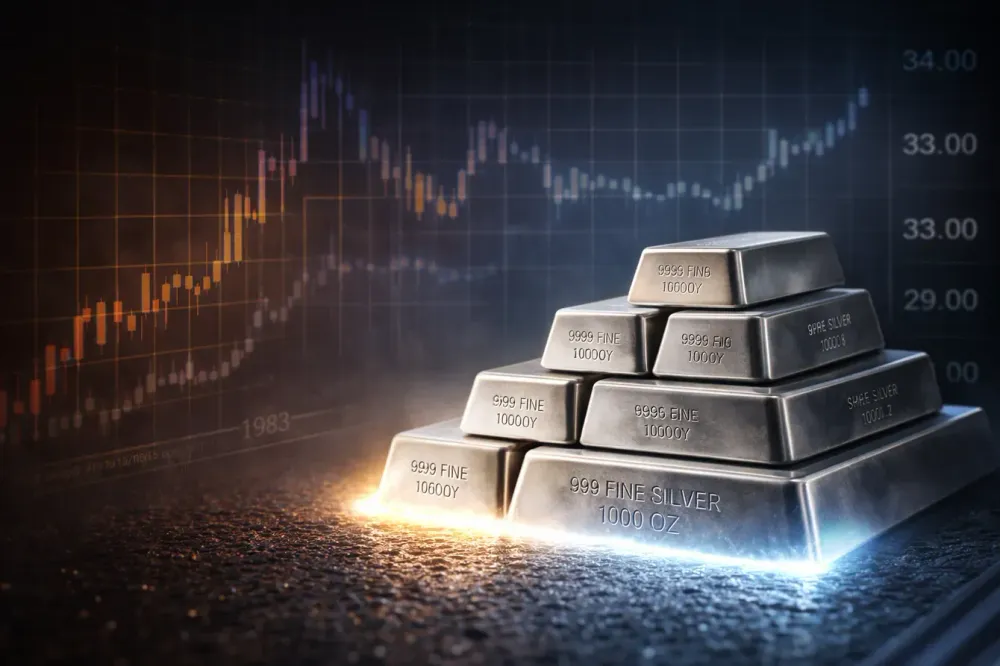
It’s only been two weeks, but the precious metals market is already acting like it’s lived through an entire year—particularly silver, which appears to have mistaken momentum for invincibility.
Both gold and silver are posting their biggest new-year gains on record. Gold prices are up $256 so far this month, while silver has surged nearly $17.50. In percentage terms, gold is up 6%, already approaching last year’s 7% January rally. Silver, meanwhile, is up more than 24%, marking its strongest start to a year since 1983—when shoulder pads and mullets were still considered a good idea.
While it’s unlikely the rally in gold and silver is completely over, the pace is clearly slowing. Gold ended the week below $4,600, and silver slipped back under $90 an ounce, reminding traders that gravity still exists.
Silver’s pullback shouldn’t come as a shock. The supply-crunch narrative that powered prices higher through the second half of 2025 appears to have reached at least a temporary conclusion. Late Wednesday, President Donald Trump announced that following a Section 232 tariff review, his administration will not impose tariffs on critical metals—for now. The U.S. has been stockpiling silver for nearly a year amid tariff fears, but with the storm clouds clearing, the physical market may finally return to something resembling normal.
Gold, meanwhile, has run headfirst into a wall of economic reality. Recent data suggest there’s no urgency for the Federal Reserve to cut interest rates. While rates are still expected to move lower this year, the first cut likely won’t arrive until at least June—patience, as always, remains the most expensive commodity.
Some short-term selling pressure and consolidation wouldn’t be surprising, but a full return to “normal” markets seems unlikely. Traders abandoned the traditional precious metals playbook long ago and are now navigating a market defined by tight supply, persistent demand, and shifting macro narratives. And while liquidity in silver may improve, supply constraints haven’t magically disappeared.
With the Fed expected to hold steady through the first half of the year, gold faces headwinds from higher bond yields and a stronger U.S. dollar. That said, the long-standing relationship between gold and interest rates has been broken for a while, and no one seems particularly interested in fixing it. Ongoing geopolitical uncertainty continues to provide solid support for safe-haven demand.
For investors choosing sides, some analysts suggest gold has a slight edge. Silver’s 150% rally over the past 12 months has pushed the gold-to-silver ratio to its lowest level since 2012. Just as the ratio couldn’t hold above 100 last year, many believe current levels are living on borrowed time.