Australia's Minerals 260 expands Bullabulling gold resource by 38%, publishes PFS
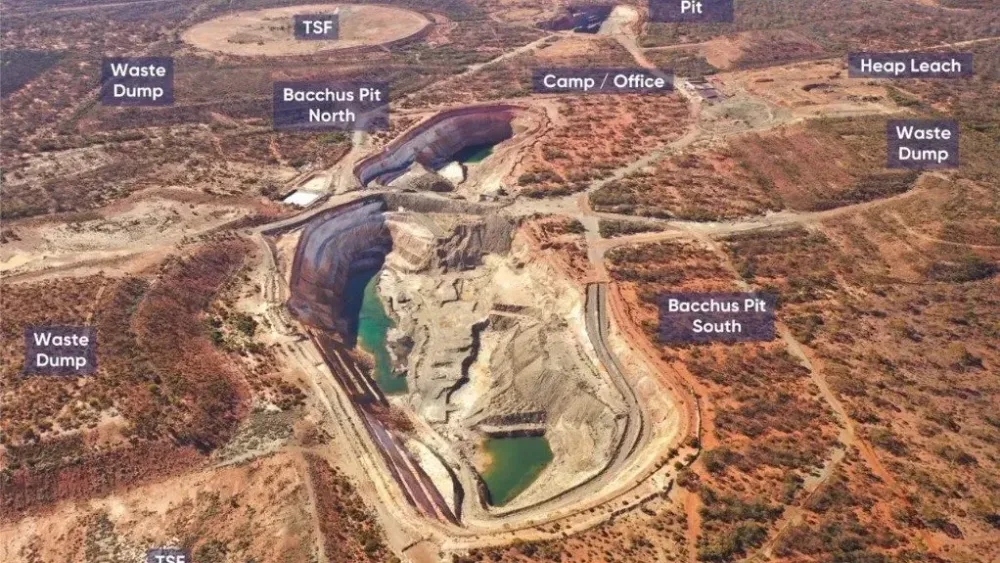
ASX-listed Minerals 260 has published an updated mineral resource estimate (MRE) for the Bullabulling gold project, in Western Australia, to 190-million tonnes grading 1 g/t gold for 6.2-million ounces.
The resource expanded by 38%, or by 1.7-million ounces, from the prior MRE published in December 2025.
About 71% of the MRE is classified as indicated, marking a 47% increase in these resources.
Minerals 260 says its drilling confirmed extensions of the MRE at depth at the Dicksons, Phoenix, Bacchus, Kraken and Gibraltar deposits. The company undertook about 78 000 m of additional drilling since acquiring the project 15 months ago.
The 6.2-million-ounce MRE provides a materially larger resource for optimisation in the upcoming definitive feasibility study (DFS) on the project, with an updated ore reserve also targeted for release during the first quarter of next year.
"Bullabulling is firmly established as one of Australia's premier gold development projects and our strategic objective of creating a large-scale operation by the end of 2028 continues to progress rapidly," says Minerals 260 MD Luke McFayden.
Meanwhile, the company finds in a prefeasibility study (PFS) on the project a net present value of A$2.3-billion, an internal rate of return of 43% and a two-year payback period. The PFS estimates Bullabulling can generate yearly free cashflow of A$330-million and earnings of A$510-million.
The PFS describes the production of 150 000 oz/y from a five-million-tonne-a-year processing plant, at all-in sustaining costs of A$2 520/oz, over a 19-year operating life.
Minerals 260 notes a A$180-million pre-final investment decision (FID) capital requirement to support early construction activities of village and water infrastructure, which have started being built, as well as long lead items, detailed engineering design, administration buildings and communications.
The infrastructure capital estimate for the project, excluding the pre-FID capital, is A$560-million, while another A$115-million is estimated for pre-production operations for mining and commissioning.
The company is evaluating a staged approach to determine the most capital-efficient development pathway and to achieve earlier production and cashflow.
The DFS workstreams started in May and are targeted for completion in the first quarter next year, following which the board will consider making an FID.