
Trump's statement on Iran slams gold
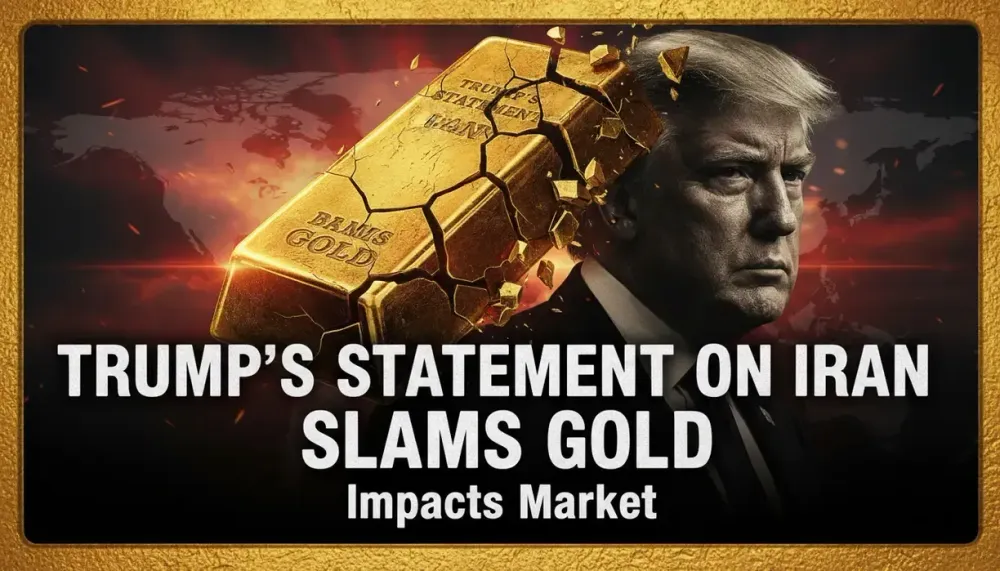
Gold prices fell as much as 2% in a matter of two hours on Wednesday, as oil prices surged and inflation concerns intensified after President Donald Trump said an interim agreement aimed at ending the conflict with Iran was “over.” Speaking at the NATO summit in Ankara, Trump added that he no longer wished to engage with Tehran, unraveling the memorandum of understanding signed only weeks earlier to end their four-month conflict.
In an outburst of aggression, Iran said it had targeted U.S. military sites in Bahrain and Kuwait after U.S. forces struck Iranian targets in response to attacks on tankers in the Strait of Hormuz. Crude oil prices jumped more than 5%, touching a two-week high, while the U.S. Dollar Index firmed to its best level in about a week as traders bet the standoff will keep energy costs, and inflation, elevated longer.
Later in the day, the Minutes were released from Kevin Warsh’s first FOMC meeting as the new Chairman of the Federal Reserve. The meeting summary provided few details of what the new Chairman described as a “family fight” over policy direction. Just like the Chairman himself, the Minutes offered little forward guidance since he took the gavel; the post-meeting statement had already been trimmed to a terse pledge that “the Committee will deliver price stability,” and the Minutes were similarly spare.
Ultimately, Fed officials remained split on where rates should head next. Of the eighteen policymakers who submitted year-end rate projections, nine penciled in at least one increase, eight saw no change at all, and one favored a cut — an even split on further tightening. The Minutes cited tariffs, elevated energy costs, and lingering disruption from the Strait of Hormuz closure as the forces keeping inflation elevated near-term, with risks still tilted to the upside. Warsh himself withheld a projection, the first sitting Chairman to do so since the Fed’s “dot plot” began in 2012.
Towards the end of the session, crude oil gave back approximately half of its earlier gains, trading about 2.5% higher on the day. That retreat, along with the lack of a clearly hawkish slant in the Fed’s Minutes, allowed gold to regain some of its earlier drawdown. Spot gold finished the day trading down $26, or 0.66%, and silver gave up 2.5% in value.
Wednesday’s reversal did not occur in a vacuum. Gold’s 50-day moving average crossed below its 200-day counterpart on June 30, confirming a “death cross” that chart watchers view as a warning that momentum has turned firmly lower — a signal that followed an earlier bearish crossover on May 11, when the 50-day slipped below the 100-day. Neither trend offers the metal much cover as the fundamental backdrop keeps growing more complicated.
Not every signal points the same direction, however. China’s central bank reported its largest monthly increase in gold reserves in more than two and a half years for June, underscoring that official-sector buying has continued even as prices correct. Blaming the renewed inflation concerns, Bank of America lowered its 2026 average gold forecast by 14% to below $4,400 in a note released Tuesday, though the bank continues to see gold reaching $5,000 an ounce once the current tightening cycle concludes.