Copper smelters face worsening squeeze as negotiations stall
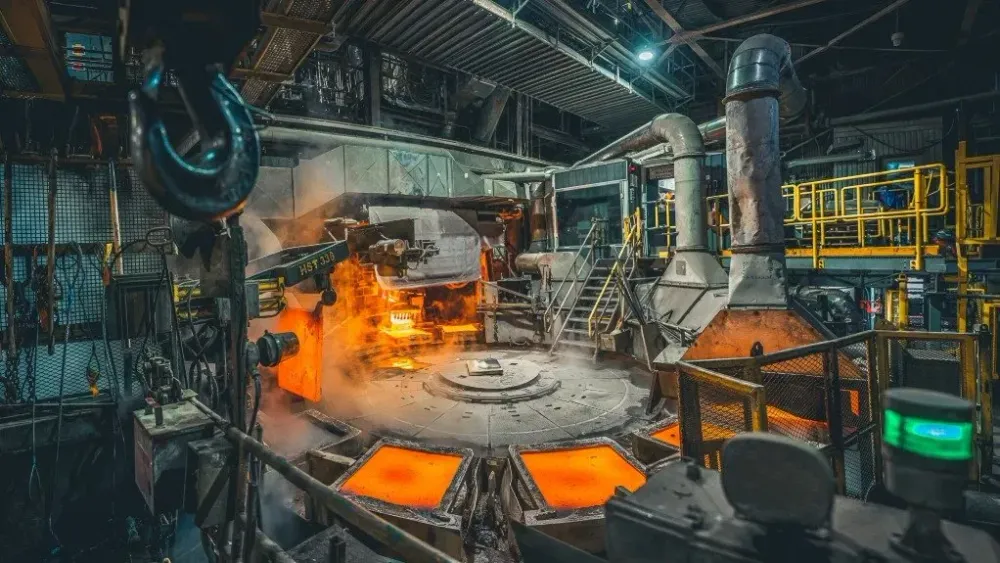
Copper smelters are bracing for a period of extreme financial pressure as closely-watched negotiations over supply contracts for next year go down to the wire.
Talks between Chinese copper smelters and Antofagasta for annual supply of semi-processed copper ore, known as concentrates, typically set a benchmark for the entire industry. Yet after negotiations in Shanghai last week, the two sides are still far apart, as the Chilean miner pushes for deeply negative processing fees, according to people familiar with the matter, who asked not to be named because the negotiations are private.
The outcome of the annual talks is crucial for the global copper industry: it will help determine the financial pressure facing the global smelting industry — potentially leading to production cuts or even smelter closures. For miners and traders, it sets the price of a large number of contracts in the $200-billion-a-year copper concentrate market.
The squeeze on copper smelters comes after years in which the industry has expanded capacity much faster than the supply of ore has grown. China is the world’s capital of copper smelting, accounting for 44% of global capacity, but new smelters have also been built recently in India, Indonesia and the Democratic Republic of Congo.
The processing fees, called treatment and refining charges or TC/RCs, are normally paid by miners to smelters for processing concentrate into refined copper. But for the past two years, TC/RCs have fallen to negative levels on the spot market, meaning that smelters are effectively paying more for concentrates than the value of the copper it contains.
For much of this year, smelters have been able to withstand negative processing fees because disruptions to oil supplies during the Iran war pushed up prices of sulfuric acid, a key smelting byproduct. The extra earnings helped keep many Chinese producers profitable — but sulfuric acid prices have fallen in recent months, pressuring margins.
At the negotiations during Cesco Asia Copper Week in Shanghai, Antofagasta offered treatment charges of around minus $200 a ton, according to people familiar with the talks. Tongling Nonferrous Metals Group, one of China’s largest smelters, hasn’t made a counter-offer, said the people.
Several other members of the China Smelters Purchase Team, or CSPT, also refrained from putting forward numerical offers. Some smelters are waiting to see the outcome of Antofagasta’s negotiations with customers in other countries, the people said.
“If there’s a deeply negative benchmark, that would trigger a smelter demand adjustment,” Craig Lang, an analyst at CRU Group, said in a presentation in Shanghai last week. The consultancy expects copper treatment fees for annual contracts to settle at minus $50 to minus $100 a ton for 2027, he said.
The lack of an agreement after the Shanghai gathering is not unheard of, but people involved in the discussions said they were unusually tough this year. Miners and smelters typically begin laying out their views on concentrate supply and demand around the London Metal Exchange’s annual gathering a month earlier, before seeking to narrow their differences and establish a contract during the industry meetings in Shanghai.
Antofagasta and Chinese smelters agreed last year to annual treatment and refining charges of zero dollars a ton and zero cents a pound for 2026, the lowest ever. Still, that deal has looked cheap in hindsight as the spot market plunged to around minus $300 this year.
While Tongling hasn’t made a formal counter-offer, Tongling officials in Shanghai last week told some customers that around minus $80 a ton was a level it might be prepared to accept, some of the people said. That’s roughly in line with the level of about minus $90 that some Chinese smelters estimate as their cash break-even point.
Tongling declined to comment, as did a spokesperson for Antofagasta.
The so-called “benchmark” deal has lost some significance in recent years, as more supply has shifted to the spot market or to contracts linked to indexes of spot prices. Still, Chinese smelters are reluctant to use index-linked pricing for annual contracts because the spot fees have fallen so far below zero, preferring instead to establish a negotiated benchmark, the people said.
Smelters and miners typically have fallback provisions in their contracts if they fail to agree a price, allowing them to skip deliveries for a period of time or defining how the price should be determined. If no miner and smelter are able to agree a price for next year, that could herald the end of the benchmark system altogether.
The negotiations took place against a week of extreme volatility in copper. Deteriorating smelting economics had already prompted Chinese producers to cut output in the second half of this year, contributing to lower refined-copper inventories and helping lay the groundwork for last week’s squeeze on the Shanghai Futures Exchange.