Epiroc demonstrates autonomous haulage excellence at Hancock's Roy Hill mine
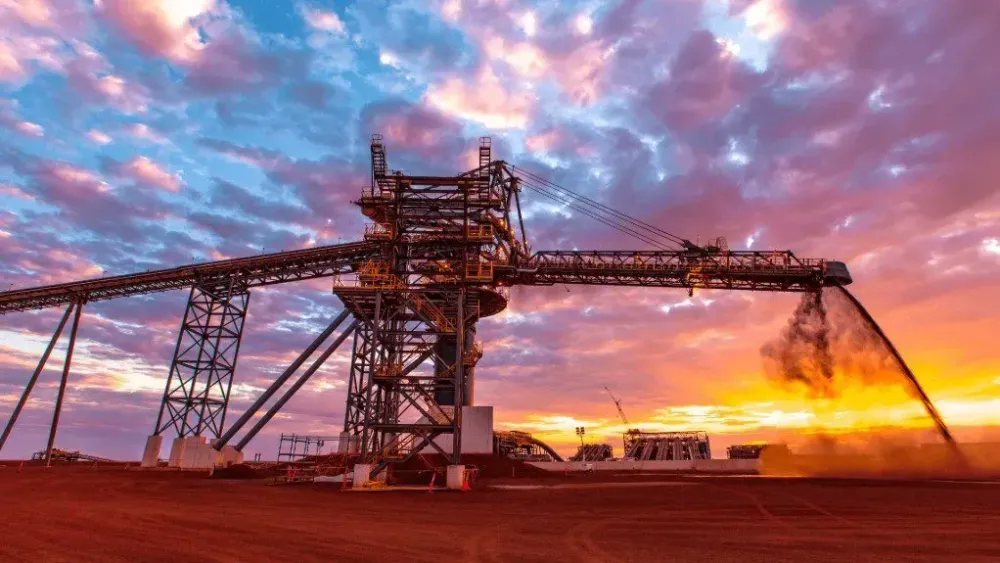
Mining equipment and services provider Epiroc has reached the milestone of moving more than 500-million tonnes of material autonomously using its LinkOA system at Hancock Iron Ore's Roy Hill mine, in Australia.
For the company, reaching half-a-billion tonnes of material movement is significant, however, the rate at which the operation has scaled is equally important, says Epiroc autonomous haulage systems project director Marcel Stoelman.
"Moving the first 100-million tonnes took more than three years. The most recent 100-million took just five months. That progression demonstrates what can be achieved as autonomous haulage is developed, deployed and scaled across a large mining operation," he explains.
The pace at which material is being moved has increased steadily, supported by the continuous development of the LinkOA platform and a growing number of trucks running autonomously.
Today, 78 haul trucks have been converted from manual to fully autonomous operation and successfully deployed at Roy Hill, creating the world's largest autonomous mixed fleet.
To move the 500-million tonnes, the autonomous fleet has safely traveled more than 12.1-million kilometres.
LinkOA enables mines to introduce autonomous haulage across mixed fleets, allowing different truck makes and models to operate within the same autonomous ecosystem, Stoelman states.
At the Roy Hill mine site, Epiroc and Hancock have progressively expanded the system while maintaining production as the fleet transitioned from manual to autonomous operation.
"The 500-million-tonne milestone represents about 85 times the mass of the Great Pyramid of Giza. The more than 12.1-million autonomous kilometres traveled are equivalent to about 303 trips around the Earth's equator," Stoelman points out.
Epiroc surface division president Omar Allel adds that half-a-billion tonnes represents years of close collaboration with Hancock and the progressive scaling of autonomous haulage at Roy Hill.
"The results demonstrate that mixed-fleet autonomy can operate at significant scale and provide mines with greater flexibility in how they approach automation," he concludes.