Gold retreats from record highs as rate hike fears weigh on sentiment
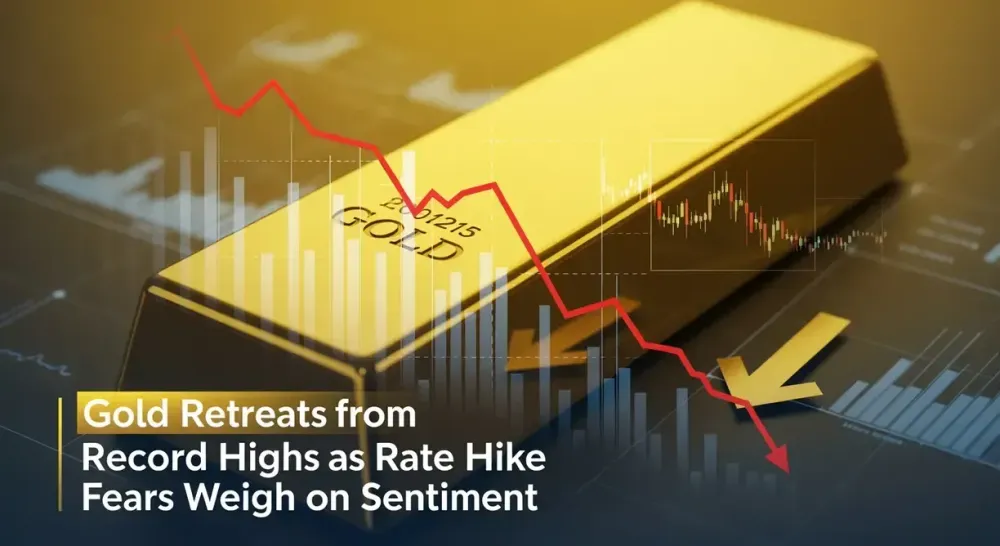
Gold prices slipped on Monday as the new trading month opened under pressure from a shifting interest-rate outlook, with spot prices falling 1.9% to $4,455.28 per troy ounce still leaving the metal more than 31% above its level from a year ago and near the upper range of forecasts heading into the summer.
The pullback came as markets digested the latest commentary from policymakers and weighed a 50% probability of at least one Federal Reserve rate hike before year-end. In his first public remarks since stepping down as Fed Chair on May 15, former Governor Jerome Powell warned against the dangers of a politicized central bank, comments that added an element of uncertainty to an already fragile rate outlook. April's Consumer Price Index came in hotter than expected, and traders have now fully priced out rate cuts for 2026, keeping the dollar resilient and trimming gold's near-term appeal.
Despite Monday's softness, the broader trend remains historically impressive. From a price near $3,304 a year ago, gold surged past the $5,000 barrier for the first time in January 2026, carried higher by safe-haven demand, central bank accumulation, and persistent macro uncertainty. The metal has since corrected by roughly 21 to 27% from that peak, a reset that can be looked at as technically healthy.
Demand fundamentals remain robust. The World Gold Council reported that global gold demand reached 1,231 tonnes in the first quarter of 2026, the highest January-to-March figure on record. Private investors accounted for 535.6 tonnes of that total, underscoring the continuing shift toward gold as a portfolio anchor even as prices pulled back from their highs.
For investors, the week ahead holds fresh catalysts. US non-farm payroll data is due Friday, and several Federal Reserve officials are scheduled to speak publicly. Strong jobs numbers would likely reinforce the case for a hike and add further pressure to gold, while any sign of labor market softening could revive expectations for an eventual easing cycle and give the metal room to recover.
For the moment, gold appears to be in a consolidation phase — digesting extraordinary gains, repricing to a higher-rate environment, and awaiting the next macro signal. With long-term demand intact and major institutions still pointing toward $5,000 and beyond, the question for markets is not whether gold's bull case remains alive, but how long the current pause will last.