Gold is boring again, but that’s the point
After unprecedented attention and enthusiasm at the start of the year, the gold market has settled into a quieter phase - okay, lets be honest - it has become downright boring.
Trading volumes have dropped in recent weeks as prices fluctuate within a broad range between $4,600 and $4,900 an ounce. Despite ongoing geopolitical tensions and elevated economic anxiety, there is little sense of urgency driving near-term positioning.
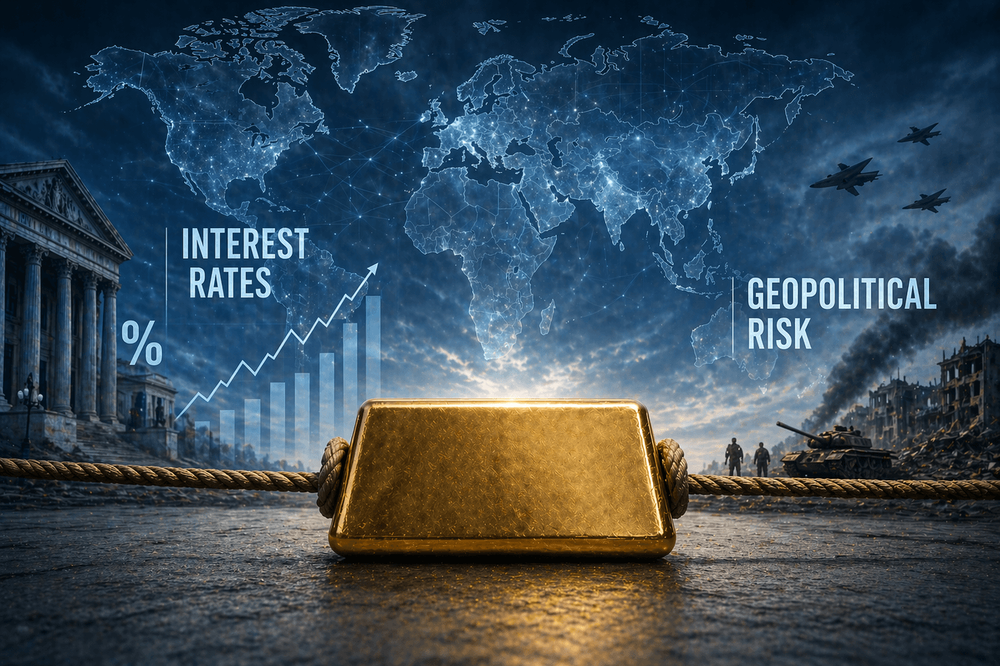
Renewed inflation concerns have pushed interest rate expectations higher, raising the opportunity cost of holding gold and making it difficult to justify aggressive buying. At the same time, one would have to be mad to play the downside and bet against the world's primary geopolitically neutral safe-haven asset.
This sense of ennui is less a problem than a reflection of how the gold market is currently functioning. Despite relatively restrained price movement, gold continues to act as an anchor in a financial system showing increasing strain. The current consolidation phase reflects not a lack of interest, but a shift in how gold is being used and who is buying it.
Recent initiatives involving the London Bullion Market Association and the World Gold Council underscore ongoing efforts to classify gold as a High-Quality Liquid Asset (HQLA). Such recognition would place gold alongside cash and sovereign bonds in terms of regulatory approval. Although this status has yet to be finalized, central banks appear to be behaving as if it’s already happened. Steady official-sector accumulation over the past several years suggests growing unease with traditional reserve assets.
While gold has retreated from January’s record highs, prices remain historically elevated and global demand has stayed resilient. Market commentary in recent months has increasingly focused on the widening gap between asset valuations and underlying risk, particularly in equities and sovereign debt. Geopolitical fractures also remain an underappreciated threat to global economic stability. In this environment, gold is being treated less as protection against a single economic outcome and more as insurance against broader systemic stress.
This underlying demand is especially evident in central bank activity, notably from the People’s Bank of China. In March, when gold prices experienced their sharpest monthly decline in decades, China’s central bank purchased gold at its fastest pace in more than a year. Price dips are being treated as opportunities, not warning signs. This behavior helps explain why gold has been able to hold historically high levels even as momentum slows.
Although short-term volatility has disrupted gold’s correlation with other assets at times, it still functions as a long-term diversification tool. Viewed over a longer horizon, gold’s lack of yield is less of a disadvantage than it appears during short-term rate-driven cycles. Unlike most financial assets, gold carries no counterparty risk—a characteristic that becomes more valuable during periods of systemic uncertainty.
The recent consolidation does not, on its own, suggest that gold’s underlying appeal has weakened. Instead, the market appears to be absorbing higher prices without generating meaningful selling pressure, indicating that long-term holders remain in control. Gold’s return to quieter, range-bound trading may ultimately be revealing stability rather than stagnation.